
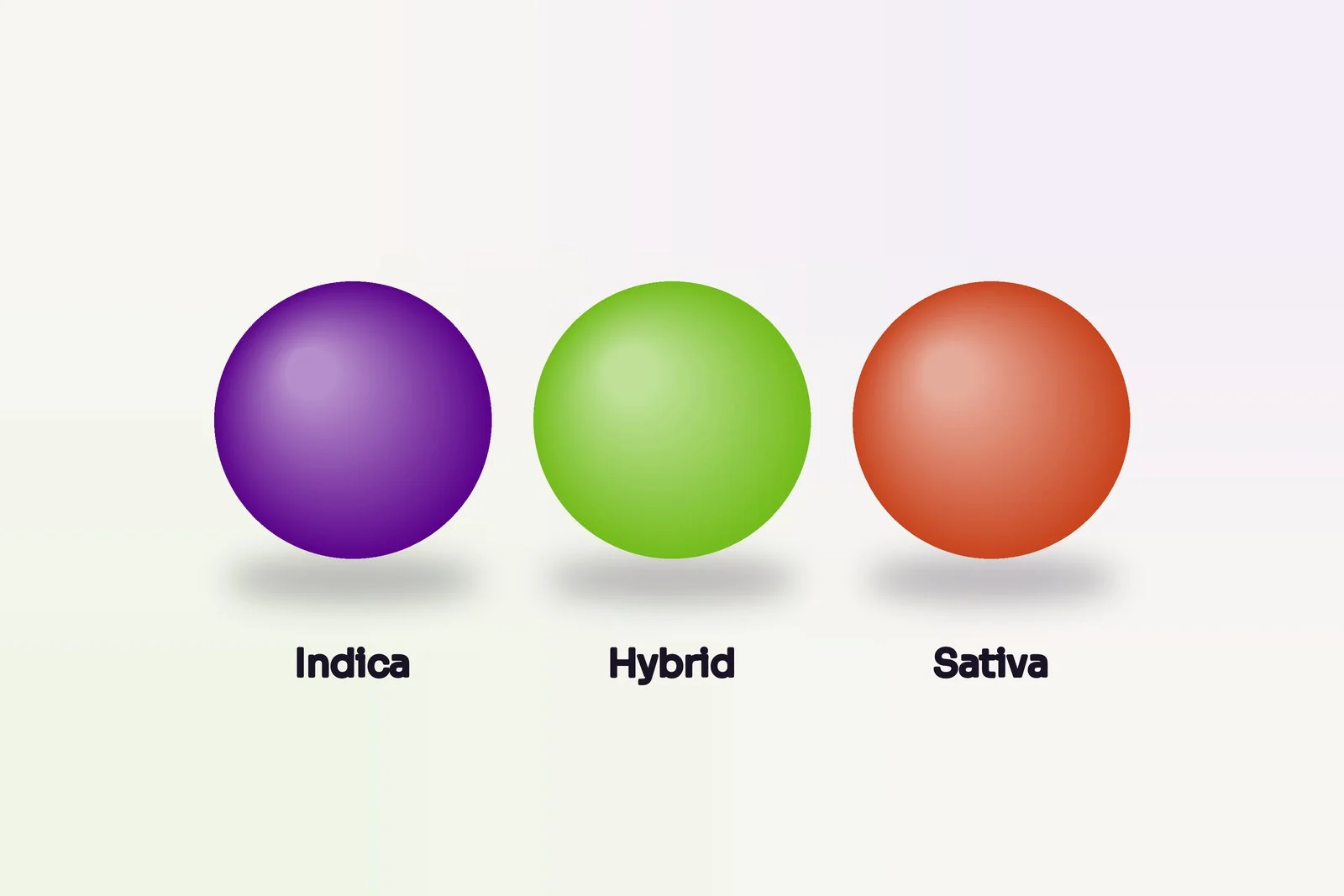
Scroll through our flower and concentrates and you’ll notice most products wear a colour: purple for indica, orange for sativa, green for hybrid. It’s the oldest shorthand in cannabis. It’s also one of the most misunderstood.
Where the names came from
Centuries ago, botanists used “indica” and “sativa” to describe plants that looked different. Indica plants were short and bushy, with broad leaves, from the mountains of Central and South Asia. Sativa plants were tall and lanky, with skinny leaves, from warmer climates.
Over time the words took on a second life as a promise about how a strain would feel.
The reputation
- Indica: “in da couch”. Mellow, heavy, body-focused, an evening kind of thing.
- Sativa: bright, social, head-focused, a daytime kind of thing.
- Hybrid: a bit of both.
The plot twist
After decades of cross-breeding, almost every strain on the market today is genetically a hybrid. When researchers have compared the indica or sativa label on products with their actual chemistry, the two often don’t match. A “sativa” can be packed with myrcene and feel deeply relaxing. An “indica” can be bright and zesty.
That doesn’t make the labels useless. They’re a reasonable first filter. They just aren’t the whole story.
What tells you more
- THC and CBD: the clearest guide to how strong something will feel.
- Terpenes: the best clue to flavour and character. See our terpene field guide.
- The producer: growers have styles. If you love one of their strains, try another.
- Your notes: nothing beats your own experience.
How we use the colours
We keep the three categories because that’s how producers classify their products and how most people like to browse. When a product sits in more than one category, it gets a three-colour “Mixed” label.
Ready to explore? Browse indica, sativa or hybrid, and this time, pay attention to the terpenes too.